

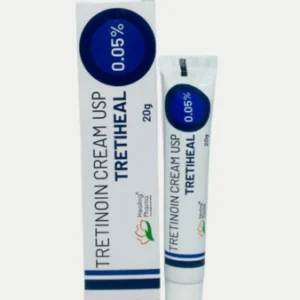
Description
Tretinoin Cream is a topical vitamin-A–based formula used in skincare routines that focus on improving clarity, texture, and tone. It works by encouraging the skin to shed older surface cells more efficiently, allowing newer skin to appear. This renewal process can help reduce blocked pores, rough patches, and visible blemishes.
Because it supports the skin’s natural regeneration cycle, tretinoin is often chosen by people looking to manage acne-prone skin, uneven pigmentation, and early visible aging signs. With steady use and proper care, the skin may appear smoother, clearer, and more balanced.
This cream is designed strictly for application on the skin’s surface and should not be used near the eyes, inside the nose, or on broken skin.
What Makes Tretinoin Cream a Preferred Choice?
- Assists natural skin resurfacing
- Helps keep pores from becoming congested
- Improves the feel and look of rough skin
- Supports a more uniform complexion
- Commonly used in dermatologist-guided routines
- Suitable for gradual, long-term care plans
Recommended Usage Guidelines:
Use a small amount on clean, dry skin once per day, preferably at night. Apply a thin layer over the target area and rub in gently. Avoid sensitive areas such as the corners of the eyes, mouth, and nose. Daytime sun protection is important since tretinoin can increase sensitivity to sunlight.
Essential Safety Information:
For topical use only. Do not apply to cuts, burns, or irritated skin. Anyone pregnant or planning pregnancy should seek medical advice before use. If combining with other active skincare products, consult a professional to minimize irritation risk. Store in a cool place away from direct heat and keep out of children’s reach.
Side Effects:
During early use, some people notice dryness, peeling, redness, or mild tingling. These effects often lessen as skin adapts. If strong irritation occurs, pause use and consult a healthcare provider.
Frequently Asked Questions (FAQs)
1. What is Tretinoin Cream used for?
Tretinoin Cream is a prescription skincare treatment commonly used to help manage acne, reduce the appearance of fine lines, improve skin texture, and fade dark spots caused by sun damage or previous breakouts.
2. How long does Tretinoin Cream take to show results?
Most people start to notice improvements after 6 to 12 weeks of regular use. During the first few weeks, your skin may become dry, flaky, or slightly irritated before it begins to improve.
3. How should I apply Tretinoin Cream?
Apply a pea-sized amount to clean, completely dry skin once daily, usually in the evening. Avoid the eyes, lips, and inside the nose, and always wash your hands after applying the cream.
4. Can I use moisturiser with Tretinoin Cream?
Yes. Using a gentle, fragrance-free moisturiser can help reduce dryness and irritation. Many people apply moisturiser after tretinoin or use it before application if their skin is particularly sensitive.
5. Do I need to wear sunscreen while using Tretinoin Cream?
Yes. Tretinoin can make your skin more sensitive to sunlight, so it’s important to apply a broad-spectrum sunscreen with SPF 30 or higher every day, even when it’s cloudy.
6. Is Tretinoin Cream suitable for everyone?
Tretinoin Cream is not suitable for everyone. It should not be used during pregnancy unless specifically advised by a healthcare professional. If you have sensitive skin, eczema, or other skin conditions, speak with your doctor or pharmacist before using it.
Reviews
There are no reviews yet.